Trump Administration Proposes Permanent Six-Figure Fee for New H-1B Visas
A new Department of Homeland Security rule seeks to codify a more than $100,000 charge for certain H-1B petitions, replacing a temporary fee previously blocked by a federal court.
Politics·
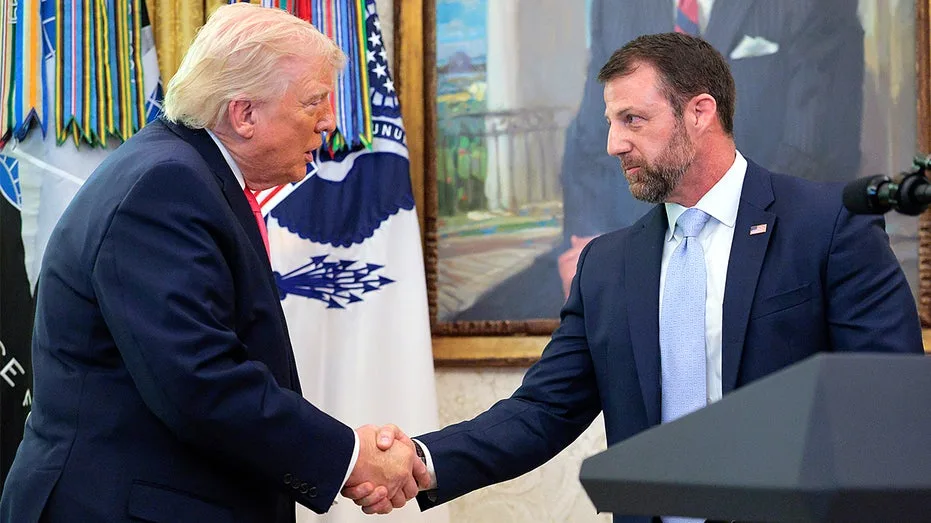
The Trump administration has put forward a new proposal to establish a permanent fee exceeding $100,000 for H-1B visa petitions that are subject to an annual cap. This move by the Department of Homeland Security (DHS) aims to replace a temporary charge implemented last year via presidential proclamation, which was subsequently blocked by a federal court.
Under the proposed rule, DHS would levy an additional fee of $103,265 for each H-1B petition that falls under the statutory annual cap. This includes petitions that qualify for the advanced-degree exemption, typically sought by highly skilled foreign workers.
Understanding the Proposed Fee and H-1B Program
The H-1B program is a critical pathway for U.S. employers to recruit foreign professionals in specialty occupations. Industries such as technology, education, and research heavily rely on these visas. Annually, 65,000 H-1B visas are available under the regular cap, with an additional 20,000 reserved for individuals holding a master’s degree or higher from a U.S. institution. These visas are generally granted for up to three years, with the possibility of extension for a total of six years.
Prior to the Trump administration's temporary order, fees associated with these visas typically ranged between $2,000 and $5,000, according to reports.
The newly proposed fee of $103,265 would be applied to all cap-subject H-1B petitions. This includes applications from some foreign students currently in the United States who are seeking to adjust their status to H-1B. However, the fee would not apply to H-1B petitions that are cap-exempt, nor to routine extensions for existing H-1B visa holders, as these are generally not subject to the annual cap.
Rationale and Legal Context
The administration asserts that the proposed H-1B fee is designed to recover the expenses incurred by various federal government agencies, including DHS, the Department of Justice, the Department of State, and the Department of Labor. These costs are associated with the adjudication, vetting, and overall support of lawful immigration programs that would otherwise require taxpayer funding.
“The proposed H‑1B fee is intended to recover the costs incurred across the federal government to adjudicate, vet, and support lawful immigration programs that otherwise must be funded by taxpayers,” stated Zach Kahler, a spokesperson for U.S. Citizenship and Immigration Services.
The initial temporary fee, introduced by President Donald Trump's administration last year, faced a legal challenge and was halted by a federal judge in June, preventing the government from collecting the funds. An appeals court is currently reviewing that judge's decision, while another court is considering whether a challenge to the fee by a prominent business group was correctly dismissed.
The temporary fee increase is set to expire next month, one year after its initial issuance. The new proposed rule from DHS was made available for public inspection on Monday and is slated for official publication in the Federal Register on Tuesday. If finalized, this rule would permanently establish the $103,265 fee, with potential finalization by the end of the year.
Conflicting Views and Broader Immigration Policies
The H-1B program has been a subject of debate. The Trump administration has frequently argued that the program is susceptible to abuse by companies that replace American workers with less expensive foreign labor. Conversely, business organizations and numerous U.S. companies contend that the program is essential to address a shortage of qualified American workers in specific fields and to enable American firms to attract highly skilled global talent, thereby bolstering the U.S. economy.
Court documents indicate that as of late February, approximately 70 employers had already paid the $100,000 fee for a total of 85 visa applications under the temporary charge.
The fee currently faces legal challenges from various entities, including the U.S. Chamber of Commerce, a coalition of Democratic-led states, and a joint group of labor unions and employers. These existing complaints could potentially be amended to challenge the new proposed rule once it is officially finalized.
Beyond this fee proposal, the Trump administration has also implemented other measures impacting the H-1B program. These include mandates for increased vetting of applicants and a proposed new visa selection process designed to prioritize higher-skilled and better-compensated workers. Earlier this month, DHS also introduced additional fees, up to $4,500, for applications to extend the stay of current H-1B workers or to transfer employees based in other countries to the U.S.
Related Stories
Trump Administration Considers Historic Mass Visa Revocation for Asylum Seekers
The Trump administration is reportedly preparing to revoke as many as 200,000 business and tourist visas from foreigners who sought asylum. This unprecedented move by the State Department could reshape immigration
Aug 25
New Jersey's 7th District Becomes Pivotal Battleground in Fight for House Control
New Jersey's 7th Congressional District is emerging as a critical battleground in the upcoming November elections, with incumbent Rep. Tom Kean Jr. facing a challenge from Democrat Rebecca Bennett. The outcome could
Aug 24
Secretary McMahon Pledges Federal Crackdown on Teacher Sexual Misconduct, Calls for End to Reassignments
Education Secretary Linda McMahon announced a federal push to eliminate sexual misconduct by teachers and staff in schools. She criticized districts for reassigning rather than firing those accused, emphasizing that
Aug 24
Trump Seeks Renewed North Korea Diplomacy Amid Shifting Geopolitical Landscape
Donald Trump is pursuing renewed diplomatic engagement with North Korea, confronting a significantly changed environment since his first term. Pyongyang now has a larger nuclear arsenal and a stronger alliance with
Aug 23