Legal representatives for Donald Trump submitted an appeal brief to the New York Court of Appeals on Wednesday, contending that the court ought to dismiss the liability determination against him in a civil fraud case totaling $464 million. The core of this case revolved around the valuation of Trump's real estate assets.
The appeal posits that the entire proceeding was fundamentally flawed, asserting that various legal deficiencies should have precluded the case from ever reaching a hearing.
"This case should have never been brought, and the judgment cannot stand," the appeal brief states. "This case is extremely unusual; it involves not only reams of improper statements targeting President Trump, his family, and his businesses, but also a decision to apply [New York law] against those targets in a completely unprecedented and unlawful way."
This appellate filing represents the most recent effort by Donald Trump to challenge what he describes as politically motivated legal actions, or "lawfare," which he maintains he faced during the period between his presidential terms. The appeal also provides a fresh avenue for Trump to dispute certain penalties that remain in effect following the initial verdict.
Background of the Civil Fraud Case
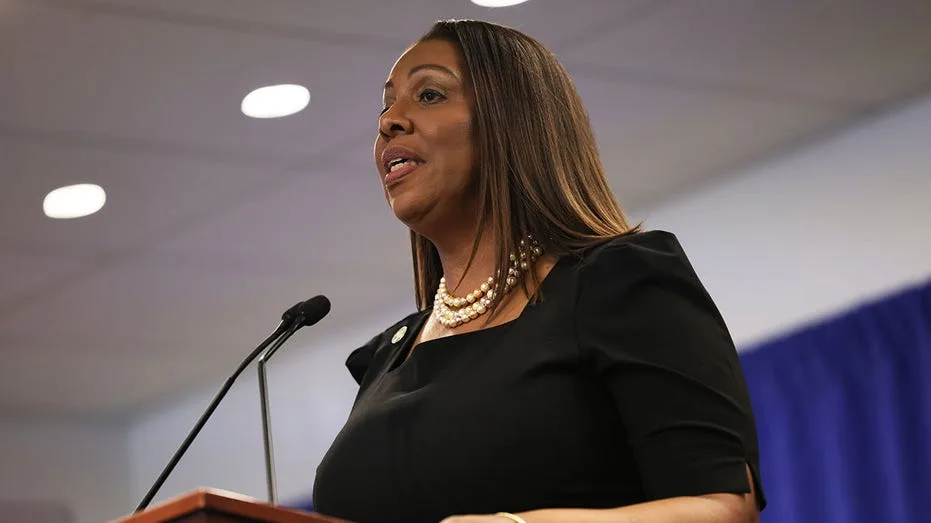
The initial lawsuit was initiated in 2022 by New York Attorney General Letitia James, who accused Trump of approximately 200 instances of fraudulent conduct. The Attorney General's office specifically contended that Trump had systematically inflated the value of properties within New York City to obtain more advantageous loans or insurance premiums. These actions, the lawsuit claimed, violated New York Executive Law § 63(12), a statute that empowers the attorney general to pursue cases involving recurrent fraudulent or illegal activities.
Under this law, fraud is broadly defined as "any device, scheme or artifice to defraud and any deception, misrepresentation, concealment, suppression, false pretense, false promise or unconscionable contractual provision."
A finding of liability against Trump was rendered in 2023. Consequently, Trump was ordered to pay $355 million in damages, along with interest. Additionally, he received a two-year prohibition from holding an officer or director position in any New York-based company.
The judgment also imposed a three-year ban preventing him from seeking loans from any New York bank or financial institution. While an intermediate appellate court subsequently set aside the monetary component of the judgment, Trump's legal team is now contending that the fundamental finding of liability and all associated remaining restrictions should likewise be reversed.
Key Arguments in the Appeal
The appeal submitted on Wednesday meticulously outlines five primary arguments challenging the verdict.
First, the legal filing asserts that Attorney General James exceeded her jurisdictional authority in initiating the case. It highlights that the dispute centers on private commercial transactions, rather than demonstrating direct harm to the broader public. Furthermore, the appeal maintains that Trump's property valuations constituted subjective estimates that were independently assessed by the lending institutions themselves, rather than representing outright fraudulent misrepresentations.
"The only supposed 'victims' here are a handful of ultrasophisticated banks and insurers that have never claimed to be injured, were eager to do business with President Trump and his family, and made over $100 million from these transactions," the appeal contends.
The appeal additionally disputes the prosecution's fundamental premise regarding overvaluation. It suggests that this premise operates on a flawed assumption that real estate possesses a single, objective value, implying that any departure from this supposed value inherently constitutes fraud.
"Under that breathtakingly broad theory, NYAG can second-guess any business transaction in this State on almost any imagined grounds," the filing warns.
Regarding the imposed penalties, the appeal labels the $450 million disgorgement as excessive, legally unwarranted, and potentially unconstitutional.
Finally, a significant point raised in the appeal is that the overtly politically charged atmosphere surrounding the case should have been sufficient grounds to prevent its consideration from the outset.
"NYAG cannot point to a single Section 63(12) enforcement action against similarly situated developers (or any other type of defendant) based on practices comparable to those alleged here," the filing asserts.
To underscore the political nature, the document cites previous public statements made by Attorney General James. These include instances where she "repeatedly called President Trump a 'criminal'; promised to 'investigate President Trump and his business transactions,' 'review ... Trump-related real estate transactions,' and 'take on ... his business in New York'; and threatened President Trump's 'family' and 'anyone in his orbit.'"